Whether you’re gathering four friends or a full house, American Mahjong can be adapted to fit your group.This guide shows you how to set up tables, manage rotations, and keep everyone engaged while staying true to National Mah Jongg League (NMJL) rules.
4 Players (Standard Table Size)
Table Layout: One table of 4
- Charleston: Required (per NMJL rules)
- Notes: This is the official NMJL configuration
5 Players
- Table Layout: 4 players at table, the 5th player rotates out.
- Rotation: After each game, the East player sits out and the waiting player joins
- The player sitting out becomes the bettor:
- The bettor chooses a player to bet on.
- If their pick wins, the bettor and winner split double the hand value (paid by the other three players if playing for money).
- If the bet is incorrect, the bettor pays the winner double. If the losing bettor’s chosen player discarded the winning tile, they also pay double if playing for money.
- The bettor chooses a player to bet on.
- Charleston is required.
- This system allows for strategy observation and a quick break between rounds.
6 Players
Option A: Rotating Table
- Table Layout: 4 play, 1 bets, 1 sits out
- Rotation: East and West rotate out after each game, sitting players rotate in
- Charleston: Required
Option B: Two Tables of 3
- Each table plays as a 3-player game.
- No Charleston (per NMJL rules).
7 Players
- Table Layout: One table of 4, one table of 3
- Rotation: After each game, East from 4-player table moves to 3-player table (making it 4), original 4-player table becomes 3-player table
- Charleston: Required at 4-player table, skip at 3-player table
8, 12, or 16 Players
Perfect multiples of 4
Table Layout: 2, 3, or 4 standard tables of 4
- Use a random draw system to assign tables:
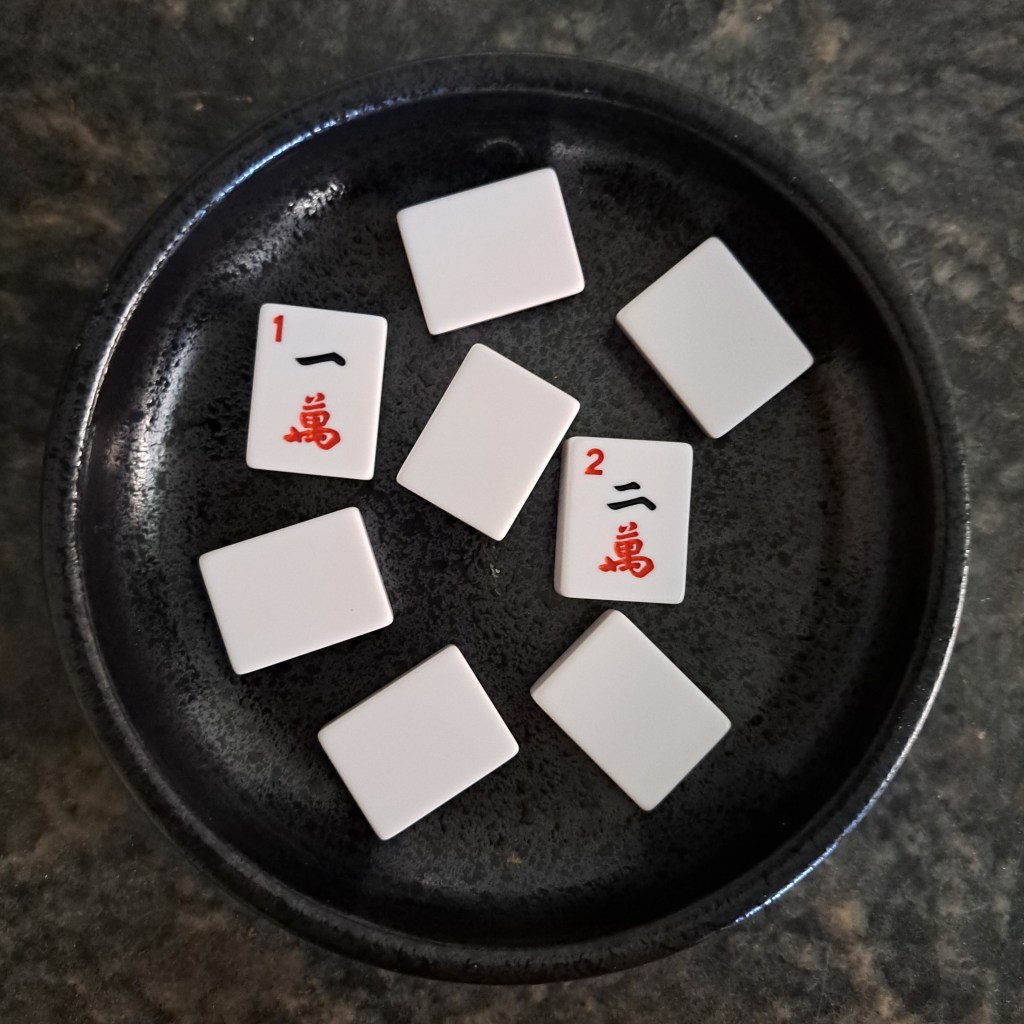
- Place numbered tiles (e.g., 1, 2, 3, 4 cracks) in a bowl.
- Players draw:
- 1s go to Table 1
- 2s go to Table 2, etc.
- 1s go to Table 1
- Place numbered tiles (e.g., 1, 2, 3, 4 cracks) in a bowl.
- After 4 games, reshuffle players and draw again.
- Charleston is required at all tables.
Optional: Group by skill level instead of random assignment
9 Players
Option A: One Table of 3 + Two Rotating 4s
- Rotate East players between the two 4-player tables.
- 3-player table skips the Charleston.
Option B: Two Tables of 4 + 1 Bettor
- The 9th player becomes the bettor and chooses a table to bet at.
- After each game, the East player rotates out, and the bettor takes their seat.
- Rotate tables after several rounds to keep things mixed.
Option C: Three Tables of 3
- All 3-player tables skip the Charleston.
10 Players
Option A: Two full tables of 4 + 2 Bettors.
- Use a draw system with 1s, 2s, and two 3 cracks:
- 1s = Table 1, 2s = Table 2, 3s = Bettors.
- 1s = Table 1, 2s = Table 2, 3s = Bettors.
- Bettors choose a table and place a bet using the same rules as with 5 players.
- After 5 games, draw again to mix tables and bettors.
Option B: Two tables of 3 + One Rotating 4s
- Rotate East player from the 4-player table.
- 3-player table skips the Charleston.
11 Players
- One table of 3 and two tables of 4.
- The 3-player table skips the Charleston.
- Rotate East players between tables—either using the 7-player rotation system or by switching when a table finishes.
13–15 Players
Option A: Three Tables of 4 + Bettors
- Extra players become bettors.
- Use a draw bowl with numbered tiles (e.g., 1, 2, 3 cracks + 4 cracks for bettors).
- After each round:
- Draw again to assign tables and designate bettors.
- Draw again to assign tables and designate bettors.
- Alternative:
- First table to finish: East steps out.
- Next table to finish: East rotates in.
- Keeps games moving and wait times short.
- First table to finish: East steps out.
Option B: Mix of 3- and 4-Player Tables
- Some tables can run as 3-player games.
- 3-player tables skip the Charleston.
Rotation Systems & Tips
Assignment Methods
Arrival Order: First come, first seated
Random: Draw tiles from bowl
Skill-Based: Group similar experience levels
Social: Mix to encourage mingling
Keep Games Moving
- Table Check: When your game finishes, check nearby tables
- Smart Rotation: Once both games finish, rotate East players for variety
Flexibility is Key
- Stay Together: Groups can stick with the same players if preferred
- Musical Tables: Embrace the movement—it’s part of the fun!
- Host’s Choice: Let the host organize seating by arrival, alphabetical order, or preference
Final Thoughts
The #1 rule? Have fun and include everyone.
Stick to the NMJL rules where it makes sense, but don’t be afraid to adjust for your group’s needs.
Whether it’s rotating tables, betting for fun, or mixing skill levels, your table system is the right one if everyone’s having a good time.
Sources FAQ 27: Table Rotation
Stay Connected with Mahj Mind
Got a question or idea? Email us: MahjMind@gmail.com
Join the community: Mahj Mind AZ Facebook Group

Leave a comment