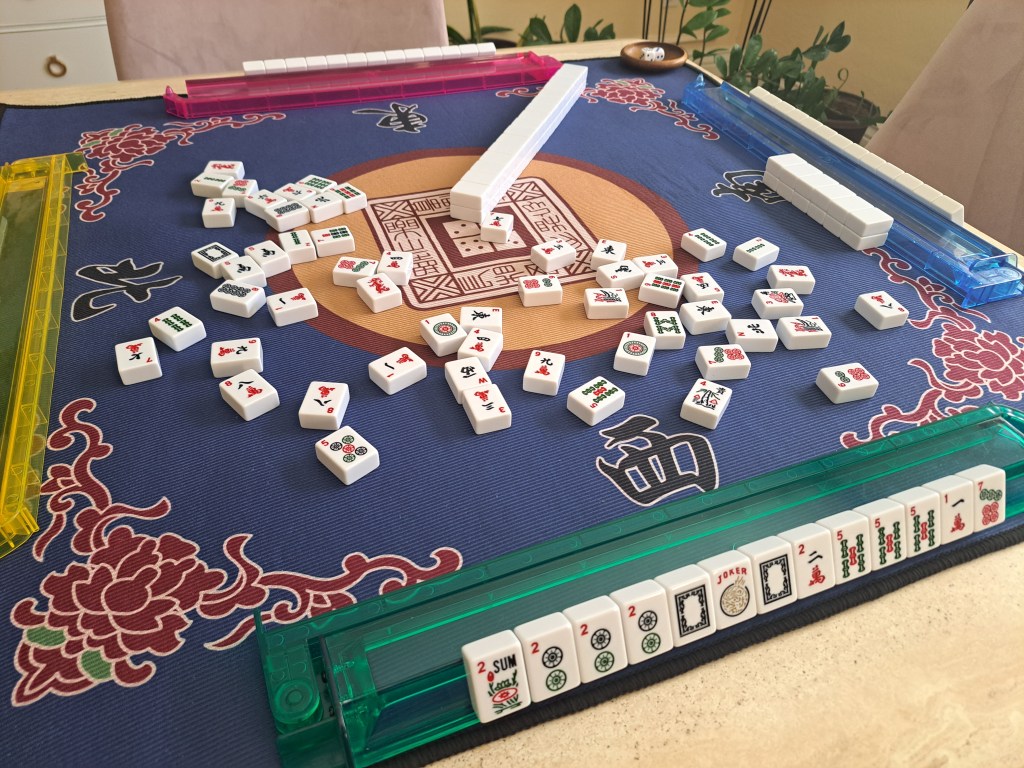
When you sit down at the American Mahjong table, every move is a decision and every decision comes with a cost. Should you commit to a hand early or keep your options open? Make an exposure or stay concealed? Call that tile now or let it go?
These decisions highlight one of the most important concepts in both economics and Mahjong: trade-offs.
What Is a Trade-Off?
In economics, a trade-off is the need to give up one thing to gain another. Because resources (time, money, or effort) are limited, every choice requires prioritization.
In Mahjong, your “resource” is tiles. How you choose to play them: what you keep, what you pass, and what you reveal shapes your chances of winning.
Trade-Offs in Mahjong Strategy
1. The Charleston: Balancing Offense and Defense
The Charleston isn’t just about passing tiles—it’s about making choices that ripple through the rest of the game. Each Charleston decision is a balancing act—helping yourself without giving your opponents an easy advantage. Every pass is a trade-off:
- Pass defensively: Mix suits, numbers, and honors to avoid helping your neighbor.
- Build your hand: Hold on to useful tiles, even if it risks passing pairs or the same number in different suits as this may be something helpful to others.
- Pairs you don’t need: Do you hold onto a pair in hopes of using it as joker bait later in the game? Or do you risk passing them as a pair that might strengthen another player’s hand?
2. Easy Hand vs. Complex Hand
- Easy hand: Hands without singles or pairs have higher odds of success, are easier to build, especially if you have jokers, but often less challenging.
- Complex hand: More challenging and riskier, whether singles and pairs or concealed, the payoff can be bigger and more satisfying.
3.Committing Early vs. Staying Flexible
One of the most common dilemmas in Mahjong is whether to commit to a hand early or keep multiple options open.
- Commit early: Gain focus and clarity, but risk locking yourself out of better opportunities.
- Stay flexible: Keep multiple options alive, but be mindful running out of time before your hand is completed.
Smart players balance timing with opportunity, adjusting as the game unfolds.
4. Exposures vs. Concealment
- Make an exposure: Moves you closer to winning and can intimidate opponents. It also gives clues to table mates about the hand you are building.
- Stay concealed: Keeps your strategy hidden, but you may miss chances to strengthen your hand.
Every exposure is a trade-off between progress and secrecy.
5. Calling a Tile vs. Playing It Safe
- Call a tile: Secure the tile you need, but reveal part of your hand.
- Wait and pass: Stay hidden, but risk never seeing that tile again.
If you need the tile for a kong, you may decide to call it, but if it is only for a pung you may choose to let the first tile go even if you have the jokers needed to expose.
6. Joker Decisions
Making an Exposure with Jokers
When you expose a set that includes jokers, you give other players the chance to strengthen their hands by making a joker exchange.
Claiming a Joker
- Do it if it helps your hand: If the joker strengthens your hand, it’s usually worth making the exchange.
- Do it for defense: Even if it doesn’t help you, exchanging and then discarding the joker can keep another player from using it.
Leaving the Joker
- If you could exchange but choose not to (for example, because the other matching tile has already been discarded), you may actually prevent someone else from completing a “jokerless” hand.
7. End-Game: Play to Win vs. Play Defense
- Push for a win: If you are one tile away, even if it is risky, do you keep building to the last tile?
- Switch to defense: Break up your hand and focus on discarding safe tiles to block others from going out.
Trade-Offs in Hand Selection
Category vs. Specific Hand
- Choose a category: Stay flexible and keep many options open.
- Pick a specific hand: Gives focus, but makes you vulnerable if you don’t draw the right tiles.
Tile Arrangement Styles
- By number: Helps spot like-numbers, but hides suit strengths.
- By category: Reveals where most tiles fit, but requires constant rearranging.
- By suit: Shows clear patterns, but may miss cross-category potential.
Multiples vs. Patterns
- Focus on multiples: Since most hands rely on them, this strategy maximizes potential.
- Focus on patterns: This keeps your options open when multiples aren’t available, though it usually takes more time to complete.
Gaps vs. Strong Foundations
- Chase a gap hand: More risky, especially if the gap is a pair.
- Build on multiples you already have: Safer, though sometimes less exciting.
Why Trade-Offs Matter in Mahjong
Mahjong isn’t just about luck—it’s a game of decision-making under constraints, just like economics. Every move involves costs, benefits, and opportunity costs.
Players who recognize and manage trade-offs sharpen both their strategy at the table and their problem-solving skills in everyday life.
Key Takeaway
In American Mahjong, as in life, you can’t have it all. Winning requires balancing risk, reward, and timing. The more you practice spotting trade-offs, the more confident—and successful—you’ll become.
So the next time you sit down to play, ask yourself: What am I gaining, and what am I giving up?
That question just might lead you to your next “Mahjong!”
Source:
HOW TO PICK A HAND (Article 183)
Stay Connected with Mahj Mind
Got a question or idea? Email us: MahjMind@gmail.com
Join the community: Mahj Mind AZ Facebook Group

Leave a comment