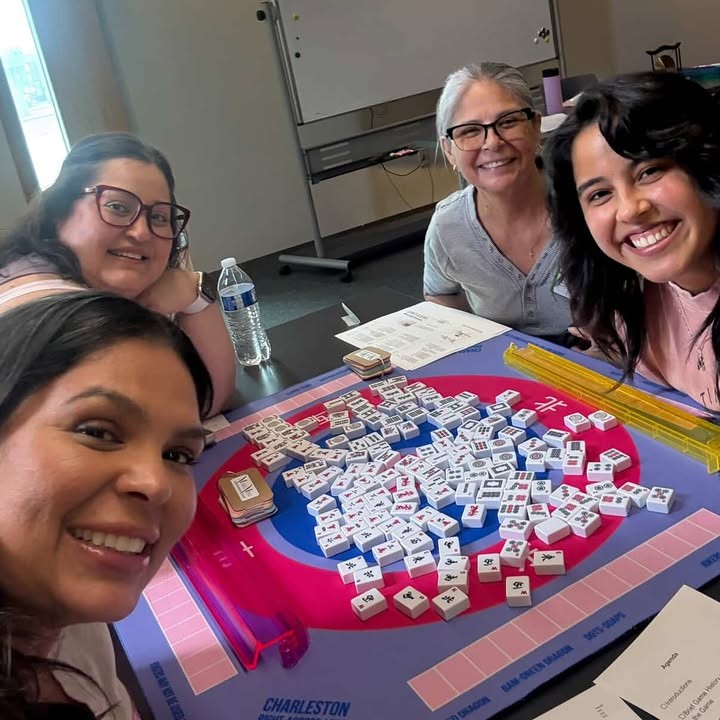
Starting something new can feel intimidating, especially when it involves meeting new people. If you’ve ever walked into a Mahjong group and wondered, “Am I in the wrong room?”, you’re not alone. Finding the right Mahjong community takes time, and not every group will feel like your group. That’s okay.
Finding the Right Fit
American Mahjong groups come in all styles. Some are fast-paced and competitive, while others are relaxed, social, and beginner-friendly. Some welcome players fresh from their first lessons, while others expect you to follow the NMJL rules with little grace.
If your first experience doesn’t feel right, don’t give up. Try different ways to play until you find the right match:
- Libraries & community centers: Often host beginner-friendly Mahjong games.
- Private lessons or small-group classes: These are a great way to build your skills while connecting with others. If you have friends or family who want to learn, consider joining them even if you already know how to play. Your encouragement can boost their confidence, and you’ll enjoy meeting new players together.
- Online Mahjong practice: Play at your own pace and build confidence.
The right group will celebrate your progress, laugh with you over mistakes, and make you look forward to returning.
Beyond the Tiles: Why Mahjong Community Matters
Mahjong isn’t just about winning, it’s about connection. Games create common ground between people who may have very different beliefs, backgrounds, or life experiences.
In a world where digital conflict and division often dominate our feeds, in-person play reminds us what we share: laughter, kindness, and the joy of being together. Sitting around the Mahjong table can ease loneliness, reduce stress, and help us reconnect with people in ways scrolling never will.
When the Group Isn’t Right
Sometimes, the chemistry just isn’t there. Maybe people don’t greet you, or the table feels unwelcoming. That doesn’t mean you don’t belong, it means you haven’t found the right fit yet.
My best Mahjong experiences have always been with players who balanced focus with friendliness. I love when large groups rotate tables. It feels inclusive, and sometimes a new chair and new mix of players changes your luck and energy.
Ask yourself:
- Do I want more social connection or more challenge?
- Do I prefer social games or competitive play?
- Do I want to play low stakes or try a tournament or play for money?
There’s no “right” answer. It’s about finding the experiences that bring you joy. And you may find enjoyment with different groups for different reasons.
Social vs. Competitive Mahjong Styles
- Social groups will likely be more forgiving and welcoming to beginners. The may have more house rules, so make sure to ask before play starts. They may spend as much time laughing as playing.
- Competitive groups stick strictly to the rules, move quickly, may play for money, and thrive on challenge.
Neither is wrong—just different. The key is finding the mix that makes you happy.
Bring Your Best Self
Wherever you land, bring patience, kindness, and positivity. Focus on the fun of playing, not your problems. Offer encouragement, and remember that everyone makes mistakes, especially in a social game like Mahjong.
If you do encounter difficult behavior, address it calmly and directly. Games should be safe, respectful spaces where intimidation and negativity have no place.
Why the Reception May Have Felt Cold
- Timing matters: Many groups consider the game to “start” at the listed time, and players arrive early to sit with friends and
- Established groups: Sometimes regulars have their own rhythm and don’t think to include newcomers unless there’s a clear opening.
- Poor etiquette: Some tables prefer not to rotate. This can create cliques. After each game, the East player sits out and the waiting player joins.
What to Try Next Time
- Arrive 10 minutes early if possible. Even if you can’t always, showing up as tables are forming at least a few times signals your commitment.
- Introduce yourself early. A friendly, “Hi, My name is Katie. I’m new here and looking for a table to join. What house rules do you use? or Do you rotate tables?” breaks the ice and gives them a chance to explain how they run things.
- Ask directly about table rotation. It’s perfectly okay to say, “Would it work for me to rotate in when someone needs a break?” Some groups are open to that.
- Look for other “newbie” allies. If you see someone else not playing, they may be a great person to practice with later.
- Talk to the organizer (if there is one). Many community centers have a point person who can help connect new players with welcoming tables.
- Is preregistration required? If so, make sure to register to ensure you have a spot. Reach out to the organizer and see if they have a “group norms” they can send prior to the event.
Final Thoughts: You Belong at the Table
Mahjong is more than a game, it’s a way to connect, laugh, and build genuine friendships. If you haven’t found the right group yet, keep trying. The joy of Mahjong comes not only from the tiles but from the people you share them with.
So if one table or group isn’t a fit? Don’t quit. Try again. Somewhere out there is your Mahjong family, the one that makes you say, “Yes, I’m in the right room.”
Stay Connected with Mahj Mind
Got a question or idea? Email us: MahjMind@gmail.com
Join the community: Mahj Mind AZ Facebook Group

Leave a comment