Master one distinction that instantly strengthens your American Mahjong confidence
If you’ve ever looked at your NMJL card and wondered why some hands feel approachable while others feel overwhelming, you’re not alone, and you’re not doing anything wrong.
One small detail makes a big difference: whether a hand is exposed or concealed.
Once you understand this distinction, the card stops feeling like a wall of information and starts feeling like a guide. Your decisions become clearer. Your confidence grows. And the game becomes more enjoyable.
Let’s walk through it together.
The X and the C: Strategy Signals
On the right side of every hand on the NMJL card, just before the point value, you’ll see one of two symbols:
- X = Exposed
- C = Concealed
These letters aren’t decoration, they’re direction. They tell you how the hand must be played.
- Exposed (X): You may call discards and reveal sets during the game.
- Concealed (C): Your tiles stay hidden until the moment you declare Mahjong.
That’s it. Simple. Powerful. Once you start noticing these letters, your entire approach to the hand shifts.
Joker Exchanges are Available for Every Hand
Here’s some reassuring news that surprises many new players:
You may exchange jokers in both exposed and concealed hands.
If you hold the natural tile represented by a joker, whether the joker is in someone else’s exposure or sitting quietly in your own concealed hand, you’re allowed to make the exchange.
It’s one of the most satisfying moments in the game, regardless of your hand type.
Calling Discards: Know Your Hand’s Rules
This is where exposed and concealed hands diverge significantly.
With an Exposed Hand (X)
You have flexibility! You may call a discard anytime it completes an exposure of three or more matching tiles (with or without jokers). This allows you to build pungs, kongs, and quints openly as the game unfolds.
If you like visible progress and tactical opportunities, exposed hands can feel empowering.
With a Concealed Hand (C)
Patience becomes your superpower.
You may only call a discard to declare Mahjong, your final winning tile. That last tile can be used to complete:
- a single
- a pair
- or a group of three or more
Staying concealed can feel challenging, but that final call? It’s incredibly satisfying.
“I Made a Mistake. What Now?”
We’ve all been there. Mistakes happen to everyone. They’re part of learning, not a sign that you don’t belong at the table.
If You Expose Once While Playing a Concealed Hand
Take a breath. You’re not out of the game.
At this point, you’ll need to pivot to an exposed hand, but you still have options:
- Try to stay within the same category
- If your exposed tiles are even numbers, check 2468
- If they’re odd, check 13579
- Scan other sections that match what you’ve revealed
Think of it as flexibility, not failure. You’re simply choosing a new path.
If you’ve made multiple exposures for a concealed hand, this is more serious. An observant player may identify that your hand should be concealed and declare it dead. This is why understanding the C marking from the start saves heartache later.
Not All Concealed Hands Are Equally Difficult
Here’s an insight that changes how many players choose hands:
Concealed hands vary widely in difficulty, even at the same point value.
- Singles & Pairs hands often pay 50+ points because matching individual tiles without exposure or joker support is genuinely challenging.
- Even among 30-point concealed hands, complexity differs:




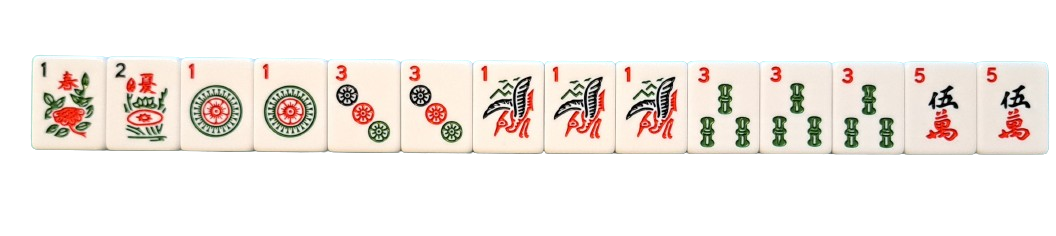



Same points. Very different paths depending on the number of pairs and singles.
As you gain experience, you’ll start choosing concealed hands that fit not just your tiles, but the level of challenge you want to test yourself.
Your Next Steps at the Table
Understanding exposed versus concealed hands isn’t just about rules; it’s about playing with intention.
Next time you pick up your card:
- Notice the X and C before committing
- Choose hands that match both your tiles and your style
- Use flexibility for exposed hands and patience for concealed ones
- Treat mistakes as information, not judgment
Every game teaches you something. You’re not just playing tiles, you’re building confidence, clarity, and mastery one hand at a time.
What questions do you have about exposed and concealed hands? Share your “aha moments” or tricky situations in the comments below. This community grows stronger when we learn together.
Source: Mahj Jongg Made Easy Page 12, 19
Ready to deepen your Mahjong journey? Explore more strategy guides and join our community of players who support each other’s growth one tile at a time.
Stay Connected with Mahj Mind
Got a question or idea? Email us: MahjMind@gmail.com
Join the community: Mahj Mind AZ Facebook Group

Leave a comment