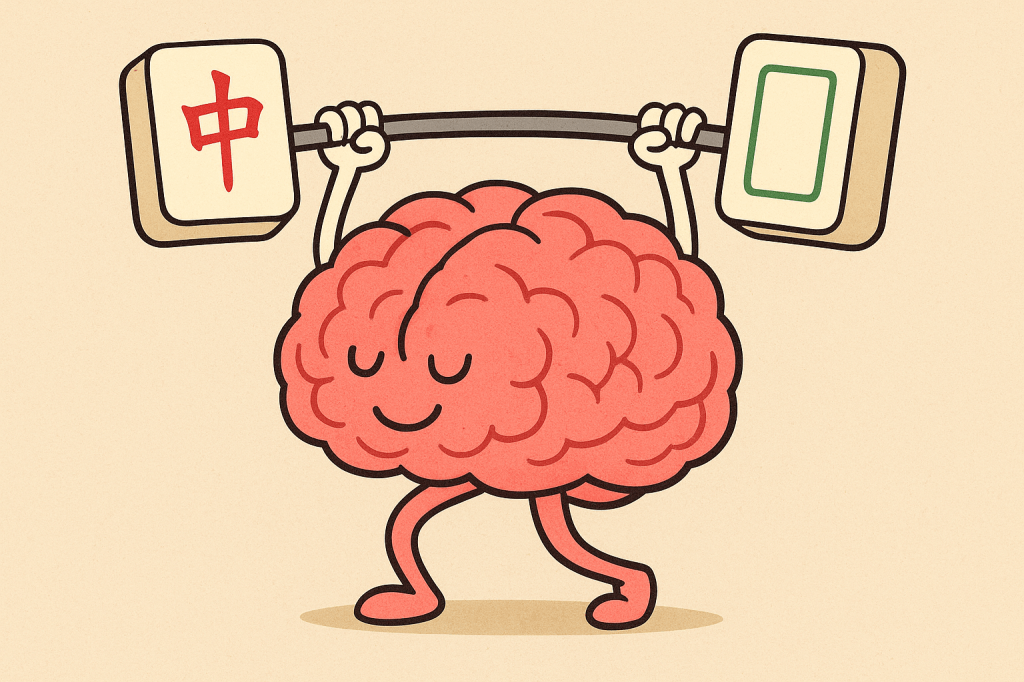
In May 2025, a groundbreaking study published in Nature by researchers at the University of California San Diego revealed something extraordinary: learning doesn’t just make the brain more active—it physically rewires how neurons connect and communicate. Led by Professor Takaki Komiyama, the team demonstrated that as we learn, the connections between the thalamus and motor cortex are refined, much like a living circuit board, becoming faster, sharper, and more efficient.
This means learning is not simply about memorization or repetition. It’s about reshaping the very scaffolding of the brain.
And that’s exactly why learning and playing American Mahjong is more than just fun, it’s brain-changing.
Mahjong as a Neural Workout
When we sit down with the National Mah Jongg League (NMJL) card each year, we are asking our brains to do something extraordinary. The patterns shift annually, forcing us to let go of old habits and build new ones.
Just as the study showed the thalamus activating specific neural pathways, Mahjong requires players to focus, suppress distractions, and strengthen the most efficient strategies. Every Charleston exchange, every decision about which tile to keep or discard, fine-tunes our neural circuits.
Think of it as a workout for your brain’s wiring: each game session reshapes how efficiently your brain spots patterns, processes possibilities, and adapts under pressure.
Mahjong and the Social Brain: Connection and Creativity
The study also highlighted that learning is a social process in the brain, and communication between regions matters more than isolated effort. Mahjong echoes this beautifully.
Mahjong is a shared rhythm of calls, discards, and wins. Players coordinate, respond, and adapt to each hand and each other. This mirrors how neurons work not in isolation, but in conversation with one another.
Every table of Mahjong players is like a living neural network: individuals contributing to a dynamic, adaptive, and creative whole.
Why Keep Playing Mahjong Year After Year?
One of Mahjong’s most brilliant features is the annual update of the NMJL card. Unlike many games that become rote with time, Mahjong demands flexibility. Just as the brain thrives when challenged with new learning, Mahjong players must adapt to a fresh set of hands, categories, and patterns every spring.
That yearly shift is not a frustration; it’s a gift. It ensures that no matter how long you’ve been playing, your brain will continue to be challenged. You are always rewiring, always growing, always sharpening your mind.
Benefits of Mahjong for Brain Health and Longevity
As a former public school teacher, I’ve always been fascinated by how people learn. I spent years studying brain health, the ways new neural pathways form, and how that knowledge can shape lesson plans and teaching methods. What I’ve come to appreciate is that this process never really stops. Even as adults, our brains are constantly reshaping themselves and one of the best workouts we can give them is through learning something new, like the game of Mahjong.
How Mahjong Strengthens the Brain
- Pattern Recognition: Playing sharpens visual skills and strengthens cognitive processing by training your brain to spot complex tile arrangements.
- Memory: Constructing and recalling hands reinforces both working memory and long-term recall.
- Flexibility: Because the NMJL card changes each year, players are continually challenged to adapt to fresh strategies and patterns.
- Social Connection: Games spark joy and belonging, while also building collaborative problem-solving skills.
Final Thoughts: Mahjong as Brain Training You’ll Actually Enjoy
The science is clear: learning literally changes the brain. Mahjong provides a joyful, social, and endlessly engaging way to embrace that truth.
So the next time you sit down at the tiles, remember: you’re not just playing a game. You’re giving your brain a workout, building connections, and strengthening your resilience one hand at a time.
Source: The Brain Rewired: How Learning Literally Reshapes Neural Circuits
Curious to see how Mahjong can rewire your brain?
Join a Mahj Mind lesson or social play session. Whether you’re brand new or looking to strengthen your game, each tile is a step toward sharper thinking, stronger connections, and lasting joy.
Online Coaching
You’ll get individualized guidance that will help build confidence and clarity.
Whether you’re brand new or ready to refine your strategy, this coaching experience meets you where you are. Every session is personalized, supportive, and rooted in a growth mindset because Mahjong is more than a game.
Book a time that works for you, settle in with your card, I Love Mahj, and Zoom. (Tiles optional.) Let’s build your skills step by step.

Stay Connected with Mahj Mind
Got a question or idea? Email us: MahjMind@gmail.com
Join the community: Mahj Mind AZ Facebook Group


Leave a reply to Katie Petrine Cancel reply