Understanding Exposures
If you’ve ever hesitated before calling a discard in American Mahjong, you’re not alone. Making exposures can be one of the most nerve-wracking yet exciting decisions in the game and getting it right can be the difference between winning and watching someone else declare Mahjong.
Let’s break down everything you need to know about exposures, from the official rules to strategic timing, so you can play with confidence.
What Is an Exposure in American Mahjong?
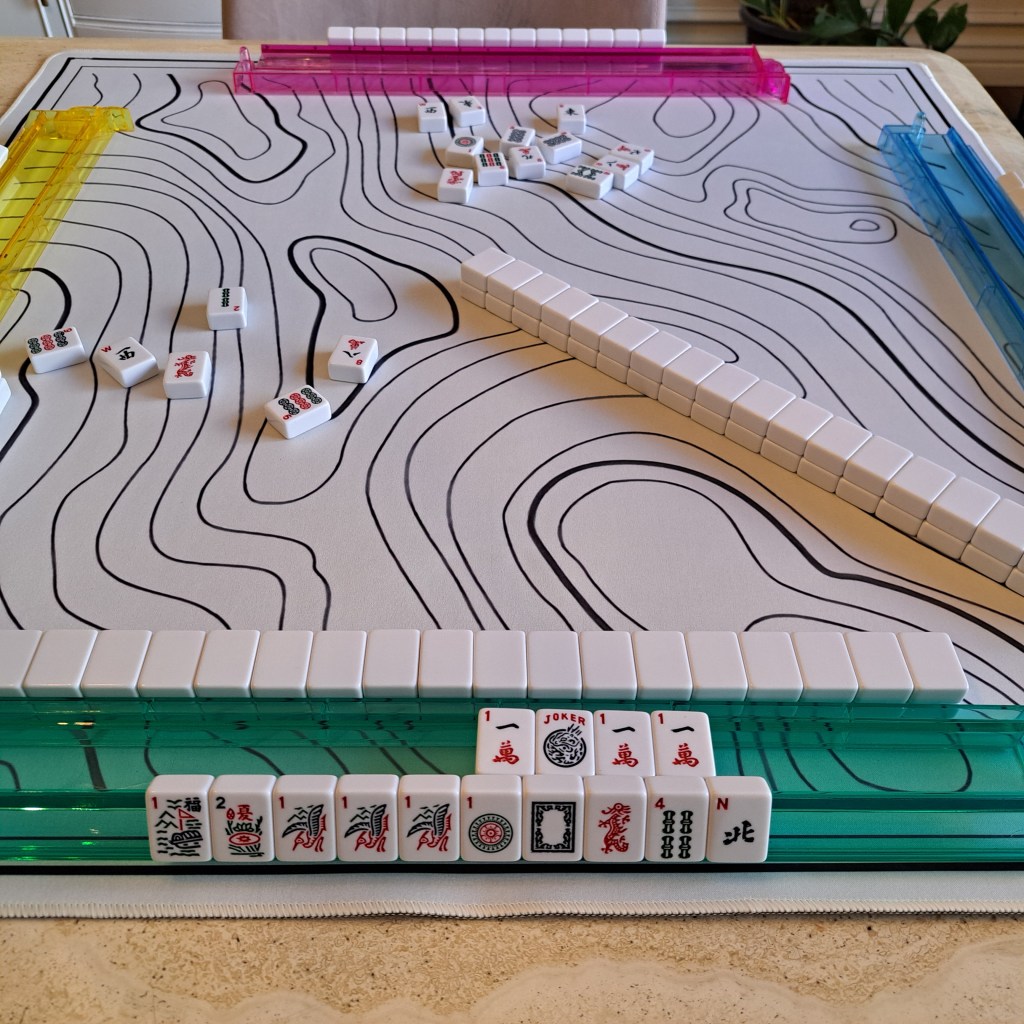
An exposure is a group of three, four, or five matching tiles (including jokers) that you display on top of your rack after claiming another player’s discard. Once you expose, you’ve committed to that combination and have given your opponents a glimpse into your strategy.
When Should You Make Your First Exposure?
The decision to expose requires both courage and caution. Here’s what experienced players consider:
The Four-Discard Rule of Thumb
If you have more than four discards, it’s usually risky to commit to a hand.
Before You Call That Tile
Ask yourself these three questions:
- Am I absolutely certain this is the tile I need? Always verify the discard before claiming it. Once you place it on your rack, there’s no going back.
- Do I have enough flexibility? Can you pivot to another hand if your next draws don’t cooperate? Or are you painting yourself into a corner?
- Am I revealing too much too soon? Remember, every exposure is a clue for your opponents. Savvy players will adjust their strategy once they identify your hand.
This means your exposure is permanent. No take-backs, no adjustments. This makes timing everything.
Understanding these rules will save you from a dead hand and help you play within the official guidelines.
You may only claim a discard if:
- You’re playing an exposed hand (as shown on the card)
- It is a group of three, four, or five matching tiles
- You need that specific tile to declare Mahjong
You cannot call a discard to add to an existing exposure. Each call must create a new exposure or complete your winning hand.
Adjusting Tile Count (Before You Discard)
Timing is everything when it comes to exposures. You can decide whether your exposure includes three, four, or five tiles, but only before you discard or complete a joker exchange. Once you’ve done either, your exposure is final.
This short window gives you a chance to fine-tune your combination—so take a moment to be sure before you commit.
Rule to Remember:
According to Mah Jongg Made Easy (2024, p. 30):
“You may never add to or subtract from an exposure after you have discarded or any time later in the game.”
In other words, once you’ve discarded, your exposure is set in stone, no changes, no take-backs. That’s why mastering timing is such a key part of strong Mahjong strategy.
Joker Exchange Guidelines
Jokers are powerful but come with restrictions:
- You cannot make an exposure and then do a joker exchange to complete that same exposure
- Other players may exchange a natural tile from their rack or a freshly drawm for a joker in your exposure
- If you later draw a matching natural tile, you may exchange it for the joker in your own exposure and return the joker to your rack—but you cannot change the tile count
Important Limitation: If another player has three natural tiles exposed and you need one for a pair, you cannot use a joker exchange to claim the natural tile. You’ll need to switch hands instead.
Name That Tile Correctly
Accuracy isn’t just important, it’s mandatory. This is where listening and looking at the discard are important.
According to official rules: “A tile cannot be claimed until correctly named… If an exposure is made with an incorrectly named tile, the hand is ‘dead’” (Mah Jongg Made Easy, 2024, p. 16).
What can happen:
- Miscaller is not penalized.
- If you make an exposure with the misnamed tile, your hand is dead.
- If you misname a tile and another player declares Mahjong: You pay four times the hand’s value to the winner, and the game ends immediately. Other players do not pay.
Take that extra second to be certain the discarded tile is the one you want.
What You Cannot Expose
Certain tile combinations must remain concealed until you declare Mahjong:
- Pairs or single tiles (including consecutive runs, year tiles, or NEWS combinations)
- All-joker combinations (you must wait until Mahjong to reveal these)
Proper Placement
Always place called tiles on top of your rack, never mixed in with your concealed tiles. This clearly distinguishes exposed tiles from those you’ve drawn yourself.
Strategic Wisdom: Think Before You Expose
Every exposure you make is a breadcrumb trail for experienced players. Once they identify your hand, they’ll avoid discarding tiles you need or push for a wall game where no one wins.
Before Making Any Exposure, Consider:
Your Backup Plan: What happens if the tiles you need don’t come? Do you have alternative hands you can pivot to?
Information Management: Are you revealing your strategy too early? Sometimes patience pays off.
Tile Availability: Have critical tiles already been discarded? Check the discard pool before committing.
Game Dynamics: Are opponents close to Mahjong? Sometimes defensive play matters more than aggressive exposure.
Building Your Exposure Confidence
Mastering exposures in American Mahjong is a journey that combines rule knowledge with strategic instinct. Every game teaches you something new about timing, risk assessment, and reading your opponents.
As your experience grows, you’ll develop an intuition for those perfect moments when calling a discard transforms your game.
Remember: the best players know not just how to expose, but when to expose, and when to keep their strategy hidden just a little longer.
Ready to put these strategies into practice? The more you play, the more natural these decisions become. Trust the process, know the rules, and enjoy the strategic depth that makes American Mahjong endlessly engaging.
Source: Mah Jongg Made Easy 2024, pg 15,16, 30
Stay Connected with Mahj Mind
Got a question or idea? Email us: MahjMind@gmail.com
Join the community: Mahj Mind AZ Facebook Group

Leave a Reply